
Live in Brussels, 14 to 15 October 2026
Know where your 5G network is exposed
before someone else does
1.5 daysCybersecurity for 5G works the network domain by domain, RAN, Core, MEC, slicing, cloud-native, and then the seams between them, where attacks travel. A day and a half live, built from 3GPP and ETSI specifications rather than a vendor's manual, so it applies to whatever equipment you run.
- Why a slice that isolates traffic does not isolate an attacker, and what does (module 3)
- What micro-segmentation has to isolate in a containerised core before Kubernetes becomes the entry point (module 4)
- How to model an AI-driven attack on RAN, Core and MEC with the same method ENISA uses (module 2)
Training operators since
Professionals trained
Countries
Average course score, year on year
The vendor course covers their box. The attack does not stop there.
5G moved the network onto software: virtualised functions, software-defined networking, containers, slices. Every one of those is a surface the 4G security model never had to cover, and 3GPP TS 33.501 now expects you to cover all of them.
Each vendor trains you on its product. Nobody trains you on the seam between products, and the seam is where an attacker moves from radio to core to edge.
Then the regulator arrives with GDPR and the security standards your market has adopted, and asks for the governance behind the controls. This course covers the whole network and the standards behind it, so the gap closes on your architecture, not on a vendor's.
No payment on this page. The Apis team confirms your seat by email.
Cybersecurity for 5G
A course covering security threats across the whole 5G network: RAN, Core, MEC, network slicing and cloud-native infrastructure.
Four things you can do on the Monday after
Analyse the 5G threat landscape
From NFV and SDN risks to AI-driven attacks, each mapped to where it lands in your network. The next threat briefing names surfaces you have already covered.
Implement security controls across RAN, Core, MEC and network slicing
The control set for RAN, Core, MEC and slicing, and the seams between them, so an attacker who gets into the radio does not get a free path to the core.
Secure cloud-native and containerised 5G environments
Kubernetes and Docker workloads treated as network functions with the hardening that implies, so a container escape is not a network compromise.
Build governance frameworks aligned with 3GPP TS 33.501, GDPR and other key standards
The frame the controls are evidenced against: 3GPP TS 33.501, GDPR, and HIPAA where health data rides the network. You leave able to answer the regulator from your own documentation.
No payment on this page. The Apis team confirms your seat by email.
Course outline
Introduction to 5G Technology and Security Framework
- Overview of 5G technology: RAN, Core, MEC, network slicing and IoT integration
- Unique security challenges in 5G: scalability, virtualisation, IoT, low-latency requirements and diverse use cases
- Key standardisation bodies: 3GPP, ETSI, ITU-T and their roles in 5G security
- ENISA's 5G threat landscape methodology and its relevance to 5G security
In-Depth Analysis of the 5G Threat Landscape
NFV, SDN and third-party supply-chain risks; threat modelling and risk assessment across RAN, Core and MEC; attack vectors introduced by AI-powered threats.
Best Practices for Implementing 5G Security Across Technical Domains
Industry best practice for the core network, RAN, MEC and network slicing; encryption, mutual authentication and slice isolation to prevent lateral movement.
Securing Cloud and Containerised Network Functions in 5G
Containerised network functions, orchestrators such as Kubernetes, and micro-segmentation to isolate critical functions.
5G Security Governance, Risk Management and Compliance
Governance frameworks for operators; compliance with 3GPP TS 33.501, GDPR, HIPAA and other regulatory requirements; incident response, continuity and disaster recovery for 5G architecture; audits and assessments.
Future Trends in 5G Security and Emerging Use Cases
Where the threat surface goes next as 5G underpins healthcare, smart cities and autonomous vehicles.
Two instructors, in the room together for both days
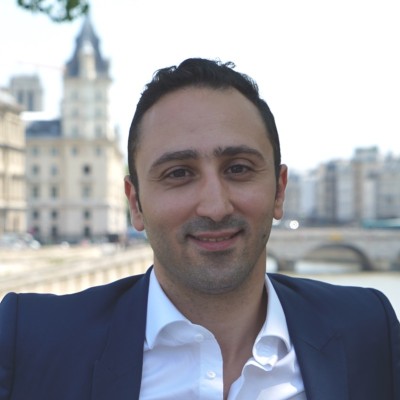
Houcem Kolsi
Senior Cybersecurity Instructor and Practitioner. Cloud-native, 5G, risk and compliance
CISSP-certified since 2016, with 18 years hands-on as cloud security architect at Airbus and BNP Paribas, 5G security consultant at Ericsson, and SaaS founder. Has delivered Cybersecurity for 5G with Apis Training since 2024 to Ericsson product teams and to Telia, Telenor and other Nordic operators. Over 250 training days in total, taught from real architectures and actual incidents in telecom, banking, aerospace and defence.
- CISSP
- AWS Solutions Architect
- Certified Kubernetes Administrator
- DORA Risk Manager

Nadia Mejri
Director, Growth and AI Security Deployment. SOC, telecom and AI governance specialist
15 years driving business expansion and technical deployment, including AI security for SOCs. Founder of Cyberpath. Tracks the EU AI Act, 5G, NIS2, NIST AI RMF and ISO 27001, 27005 and 42001, and turns them into training for decision-makers and technical leads.
- PECB ISO 27001 / 27005
- NIS2 implementation
- Cyber risk analysis
Built for the people who secure the network
Cybersecurity professionals
In telecom, critical infrastructure and technology, responsible for the surfaces 5G adds.
Telecom operators and vendors
Teams responsible for network security across RAN, Core, MEC and the cloud-native stack.
Regulators and policymakers
The people shaping the security standards the industry will be measured against.
 Also in Brussels
Travelling in? NIS2 Readiness runs 13 to 14 October.
Cybersecurity for 5G gives you the technical depth. The Resilience Cycle for NIS2 Readiness gives you the governance frame to put it inside. One trip covers both. Two trips cover both and cost you a second flight, a second hotel and the weeks in between.
Same form. Choose "Both Brussels courses" and the team reserves both.
Your seat in three steps
Leave your name and work email
Thirty seconds. No payment, no account.
Apis Training contacts you
Seat availability, invoicing and any group booking, handled by a person.
Walk into the Brussels room on 14 October
Leave on the 15th knowing where your 5G network is exposed and what to do about each surface.
What people ask first
Is this held in person?
Yes. Live classroom in Brussels: 14 October from 09:00 to 17:00 and 15 October from 09:00 to 13:00. The class is limited to 15 people, and the venue is confirmed to every booked seat before the date.
What does it cost?
Apis Training confirms pricing and invoicing before any seat is committed. Submitting your details costs nothing.
How technical is it?
Hands-on where it matters: RAN, Core, MEC, slicing and containerised workloads. The governance sessions are framed for policy and compliance roles, so an engineer and a regulator leave the same room with the same map.
Can I send a team?
Yes, and the seams between domains are easier to close when the people who own each domain are in the room together. Reserve your own seat now and say how many more you need when Apis Training gets in touch.
Is the material vendor-neutral?
Yes. Built from 3GPP and ETSI specifications, not from any manufacturer's product documentation, so it still applies after the next procurement round changes the box.
Only fifteen seats available
A day and a half, two instructors, every 5G surface, one room. Leave your name and work email below.
- Read the 5G threat landscape
- Controls across RAN, Core, MEC and slicing
- Govern to 3GPP TS 33.501 and GDPR